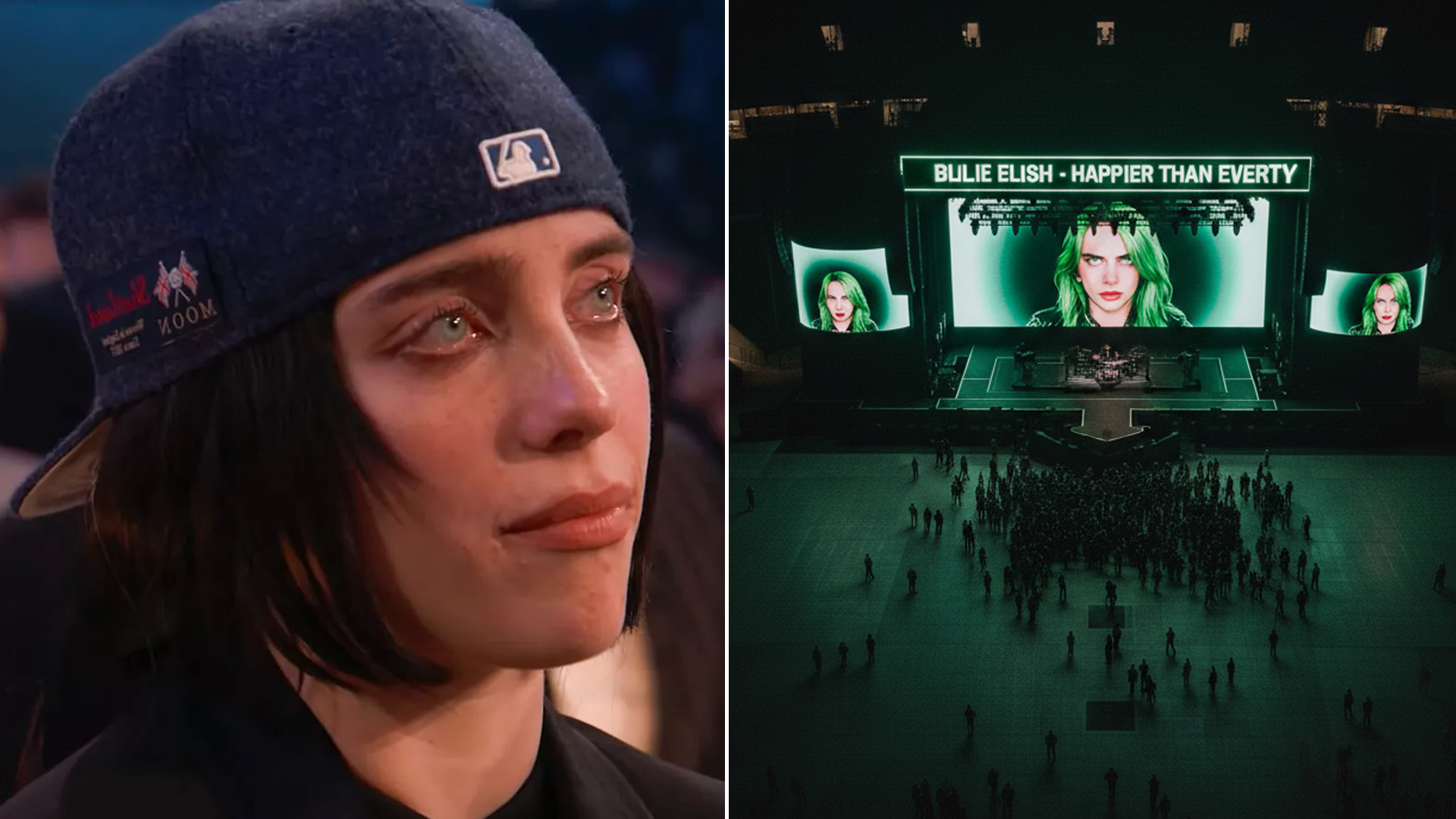
The image was jarring: row upon row of empty plastic seats, bathed in the sterile glow of venue work-lights before the show. For Billie Eilish, an artist whose name is practically a synonym for “Sold Out,” the news that a recent stop on her 2026 tour moved only 1,800 tickets felt like a glitch in the simulation. In an industry where success is measured in multi-night arena residencies, 1,800 isn’t just a low number—it’s a message.
Shortly after the figures leaked, Eilish posted a brief, unvarnished thought to her Close Friends story that has since set the internet ablaze: “Speaking out the truth costed me ticket sales.”
The friction began in early January 2026, following the fatal shooting of a woman by an ICE agent in Minneapolis. Eilish, never one to stick to a script, used her Instagram platform to label the agency a “federally funded and supported terrorist group.” She doubled down during her acceptance speech for the MLK Jr. Beloved Community Award, accusing the current political climate of fostering “kidnappings” and “murder.”
For a large portion of her Gen Z base, this was the Billie they loved—unfiltered, courageous, and morally consistent. But for others, the rhetoric crossed a line from social awareness into “toxic” territory. The backlash wasn’t just digital noise; it manifested in the one place the industry can’t ignore: the box office.
The 1,800-ticket tally represents a fascinating, if painful, case study in the modern celebrity economy.
| The Supporter View | The Critic View |
| Authenticity over Profit: Fans argue that Eilish is sacrificing her commercial “safe space” to advocate for human rights. | Alienating Rhetoric: Critics claim her language is inflammatory and alienates fans who look to music for unity, not division. |
| Generational Voice: Her stance aligns with a demographic that demands political accountability from their idols. | The “Shut Up and Sing” Crowd: A segment of the audience feels that extreme political labeling ruins the “escape” of a concert. |
When Eilish says “speaking the truth” cost her sales, she is acknowledging a new, harsher reality for A-list stars. For decades, the “Michael Jordan Rule” (Republicans buy sneakers, too) governed celebrity behavior. You stayed neutral to maximize your reach.
Eilish has effectively shattered that rule. By taking a hard-line stance against a government agency, she essentially “vetted” her own audience. Those 1,800 people in the stands weren’t just fans of the music; they were the ones who were willing to stand by her politics. In her eyes, the “missing” 15,000 fans aren’t a loss of revenue, but a shedding of those who don’t share her values.
The music industry is currently watching this experiment with bated breath. Can an artist of Eilish’s magnitude survive—and thrive—as a niche ideological leader rather than a universal pop icon?
-
Financial Impact: Tours are expensive. Low sales lead to cancelled dates and friction with promoters.
-
Cultural Legacy: Does this make her a martyr for a cause, or a cautionary tale for the next rising star?
The “Hit Me Hard and Soft” tour was supposed to be a victory lap for her latest musical evolution. Instead, it has become a battlefield for the soul of the modern superstar. Eilish seems to have made her choice: she’d rather play to a half-empty room that understands her than a sold-out arena that wants her to stay silent.

