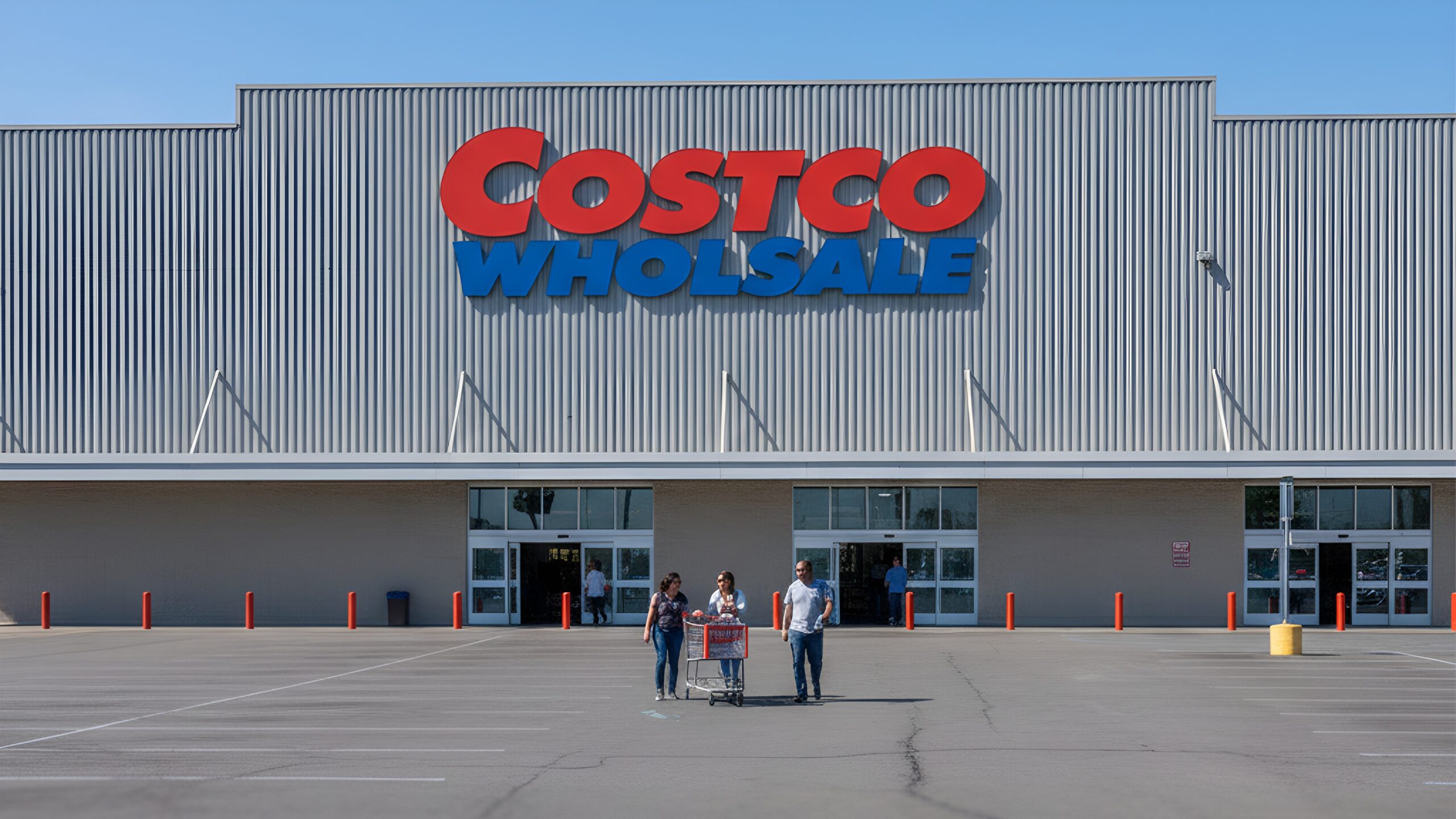
Costco’s recent clash with the Trump administration has exploded into one of the most surprising business stories of the year, and the financial shockwaves hit almost instantly.
After the retail giant filed a lawsuit challenging the legality of the administration’s emergency tariff orders, analysts estimate that Costco may have absorbed roughly $50 million in overnight losses, a sudden jolt that reflects just how sensitive markets have become to political and legal turbulence.
For a company that has built its reputation on steady growth, predictable operations, and a fiercely loyal membership base, the speed and scale of the fallout caught many observers off guard.
The turning point came when Costco’s legal team submitted a detailed complaint to the U.S. Court of International Trade. At the heart of the lawsuit is the International Emergency Economic Powers Act, better known as IEEPA—a law designed to give presidents certain powers during national emergencies.
Costco argues that the Trump administration stretched this authority far beyond its intended limits by using it to impose sweeping tariffs on imported goods. Because Costco imports an enormous range of products, from electronics and kitchen appliances to clothing and seasonal merchandise, the financial impact of those tariffs has been significant.
The company is seeking a declaration that the emergency tariff orders are unlawful, an injunction preventing future enforcement, and, crucially, the ability to secure refunds for duties already paid.
While the lawsuit reflects Costco’s long-term strategy to rein in rising import costs, the immediate consequences reverberated far faster than anyone inside or outside the company anticipated. Investors reacted swiftly, interpreting the move as a sign that Costco faces deeper tariff exposure than previously understood.
Even though many corporations have filed similar suits in recent weeks, Costco’s involvement carries a unique weight because of its size, its visibility, and its integral role in America’s consumer economy.
As soon as word of the lawsuit spread, the market began recalibrating expectations for the company’s near-term financial performance, contributing to the estimated $50 million in overnight losses.
Part of that financial hit stems from uncertainty—always dangerous territory for a publicly traded company. Investors know that when a corporation takes the rare step of suing a presidential administration, the situation is likely serious. Uncertainty triggers caution, and caution, in turn, triggers valuation drops.
Shareholders began anticipating potential legal delays, political tension, and unpredictable retaliatory shifts in policy that could influence Costco’s supply chain and pricing strategies. Markets rarely wait to see how circumstances unfold; instead, they adjust instantly, reacting to the mere possibility of complications ahead.
Another major contributor to the overnight loss is related to the import process itself. When companies bring goods into the United States, those transactions eventually undergo a formal “liquidation” process through U.S. Customs and Border Protection.
Once a shipment is liquidated, the duties tied to it become final and cannot be refunded—even if a court later rules that the underlying tariffs were illegal. Costco, like many other import-heavy corporations, faces rapidly approaching liquidation deadlines, and failing to file a lawsuit before those dates could result in millions in lost refunds.
The urgency behind Costco’s legal action signaled that the financial stakes were extremely high, adding to the market’s reassessment of the company’s risk exposure. Analysts factored these looming deadlines into their calculations, further contributing to the estimated overnight loss.
There is also the very real possibility that the legal battle could stretch for months, if not longer, leaving Costco in a vulnerable position. Until a court issues an injunction, the company must continue paying the contested tariffs on its imports.
These ongoing costs create short-term financial pressure that analysts are forced to account for, and the lawsuit itself becomes a double-edged sword—necessary for long-term protection but damaging in the immediate sense. The uncertainty about how long the legal process will take adds another layer of financial caution, prompting investors to reprice Costco’s near-term prospects.
Yet the reasons for Costco’s lawsuit are hardly unique. Dozens of companies have filed nearly identical challenges in recent weeks, all hoping to preserve their right to refunds if the courts rule that the Trump administration overstepped its authority.
Early decisions from lower courts have already suggested that the use of IEEPA to justify tariffs is legally questionable. But each importer must file individually to protect its refund eligibility, which has triggered a rush of legal activity that now includes some of the largest names in American retail and manufacturing. Costco’s entry into this legal wave is both strategic and necessary, but its prominence ensures that its lawsuit receives far more attention than most.
The broader implications of the situation extend beyond Costco’s estimated $50 million overnight loss. The dispute highlights the increasingly delicate relationship between business interests and presidential power, especially when emergency statutes are used to reshape economic policy.
Tariffs may be designed to influence foreign competitors, but their impact is felt most directly by American companies and American consumers. When tariff burdens grow unpredictable, businesses must respond quickly, often at significant cost, and Costco’s lawsuit is an attempt to push back against that instability.
Despite the financial turbulence, Costco remains a fundamentally strong company. Its membership model provides reliable revenue, its stores continue to generate high traffic, and its brand enjoys widespread trust. The overnight losses do not reflect a collapse or crisis but rather the market’s instinctive reaction to a high-stakes legal and political confrontation.
While unnerving, such reactions are not uncommon when major corporations step into direct conflict with federal policy. Over time, the market may stabilize as more information becomes available and the legal battle unfolds.
Even so, Costco’s sudden financial dip illustrates how quickly the landscape can shift for even the most stable companies. A single legal filing, even one designed to protect the company’s financial future, can alter investor sentiment, market valuation, and corporate risk assessments in a matter of hours.
Whether Costco ultimately wins its challenge or not, the estimated $50 million overnight loss stands as a striking example of how deeply political decisions and economic pressures are intertwined—and how costly it can be when those forces collide.

