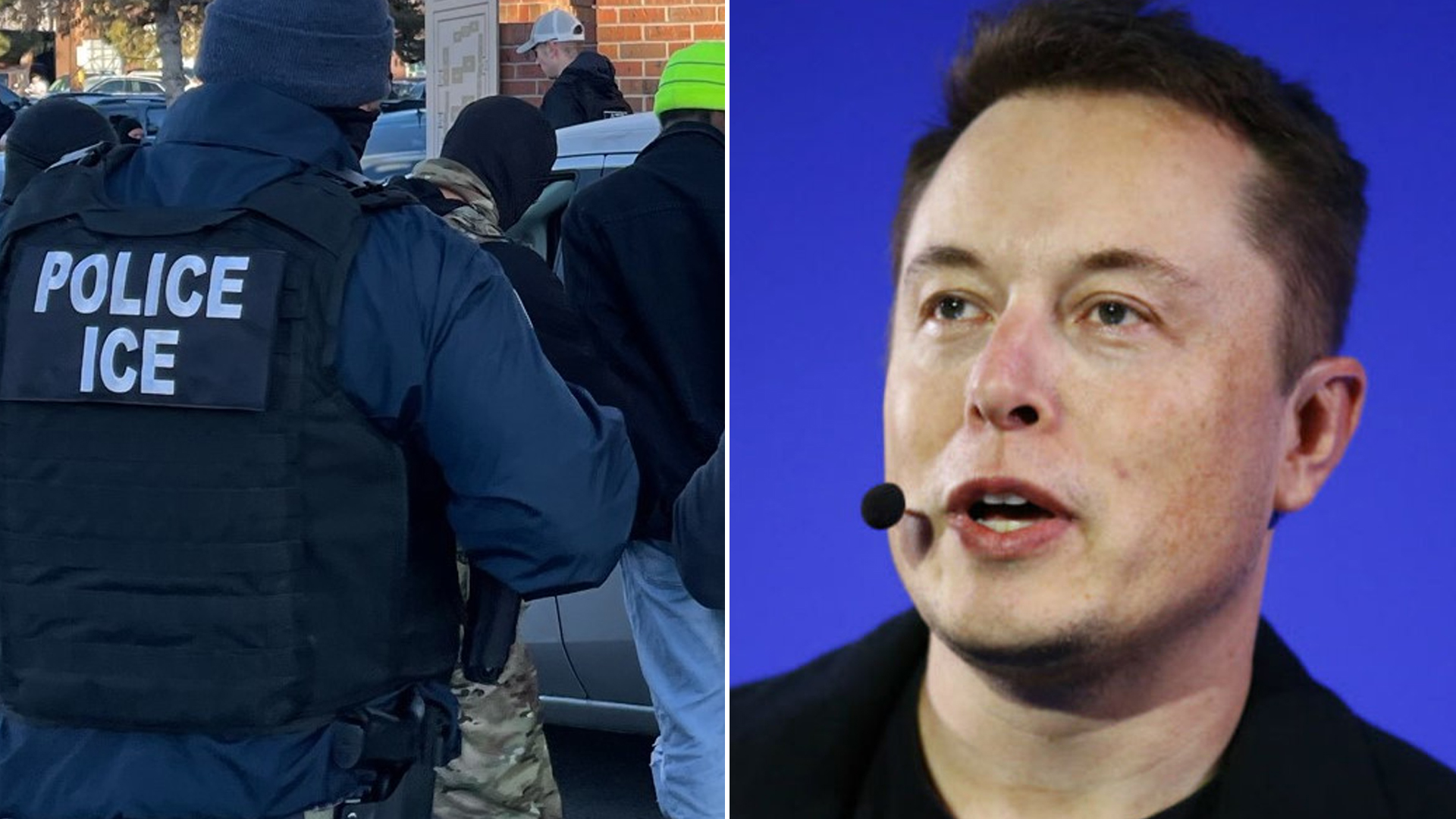
n a move that has sent shockwaves through both the tech world and the halls of Congress, Elon Musk announced a personal $56 million pledge to support U.S. Immigration and Customs Enforcement (ICE) agents. The billionaire made the announcement late Monday via a series of posts on X (formerly Twitter), framing the donation as a necessary surge of support for an agency he claims is “holding the line” during a period of intense national transformation.
The choice of the figure $56 million appears to be a pointed reference to the $56 billion Tesla pay package that was famously voided and then reinstated by a Delaware court—a victory Musk has frequently used to signal his influence over institutional systems. However, it is his rhetoric that has sparked the most immediate firestorm.
“ICE is doing the work no one else wants to do,” Musk wrote. “They help clean the country of crime and chaos. These agents are under-resourced and over-criticized. They deserve the best tech and the best legal protection to finish the job.”
The pledge arrives at perhaps the most volatile moment in the history of federal immigration enforcement. ICE is currently navigating a wave of public fury following the January 7 fatal shooting of Renee Nicole Good in Minneapolis. Good, a 37-year-old mother and U.S. citizen, was killed during a federal enforcement action that local leaders have called “reckless.”
While the Department of Homeland Security (DHS) has maintained the agent acted in self-defense, the incident has catalyzed a national “Abolish ICE” movement that has regained its 2018-era momentum. By stepping in with a multi-million dollar “booster shot” for the agency, Musk has effectively positioned himself as the private-sector benefactor of the administration’s most aggressive domestic policies.
Musk’s use of the word “clean” has been immediately seized upon by civil rights groups. The American Civil Liberties Union (ACLU) issued a statement within hours of the post, calling the language “dangerous and dehumanizing.”
“To speak of ‘cleaning’ a country when referring to human beings is a chilling echo of history’s darkest chapters,” the statement read. “Mr. Musk is not just donating money; he is subsidizing a culture of impunity that has already led to the deaths of American citizens like Renee Good.”
Conversely, supporters of the administration’s “mass deportation” initiative have hailed Musk as a hero. Many see the donation as a bridge for the agency, which has recently struggled with a drastic reduction in training requirements. Reports indicate that new agent training has been slashed from five months to just 47 days—a number allegedly chosen in honor of the 47th presidency. Critics argue this “fast-track” academy is producing agents who are ill-equipped for the complexities of field work, leading to the “collateral arrests” of U.S. citizens and a record-breaking pace of deaths in detention.
While the federal government is generally funded by taxpayers, Musk’s $56 million is reportedly being structured through a private foundation to provide:
Legal Defense Grants: Funding for agents facing civil lawsuits or local prosecutions for actions taken in the line of duty.
Surveillance Technology: High-tech “donations in kind” from Musk-adjacent companies, potentially including advanced drone tech and AI-driven tracking software.
Mental Health and “Morale” Programs: Financial bonuses and wellness services for agents operating in “hostile” sanctuary cities.
The pledge has also raised questions about the intersection of private wealth and federal law enforcement. Legal experts have noted that while private citizens can donate to the government, a billionaire funding the “legal defense” of agents in the middle of a homicide investigation creates a massive conflict of interest.
In Washington, Senator Cory Booker, who recently introduced the “Federal Agent Accountability Act,” called the move an attempt to “buy a private army.” Meanwhile, the administration has remained quiet, though sources suggest the President is “enthusiastic” about Musk’s continued loyalty.
As the “Operation Buckeye” raids continue in Ohio and “Operation Catch of the Day” moves through Maine, the presence of Musk’s $56 million loom large. To his followers, he is providing the tools to restore order. To his detractors, he is fueling a fire that is already consuming the nation’s civil liberties.
One thing is certain: by aligning his brand so closely with the “boots on the ground,” Elon Musk has ensured that he is no longer just the world’s richest man—he is now a primary architect of the American immigration landscape.

