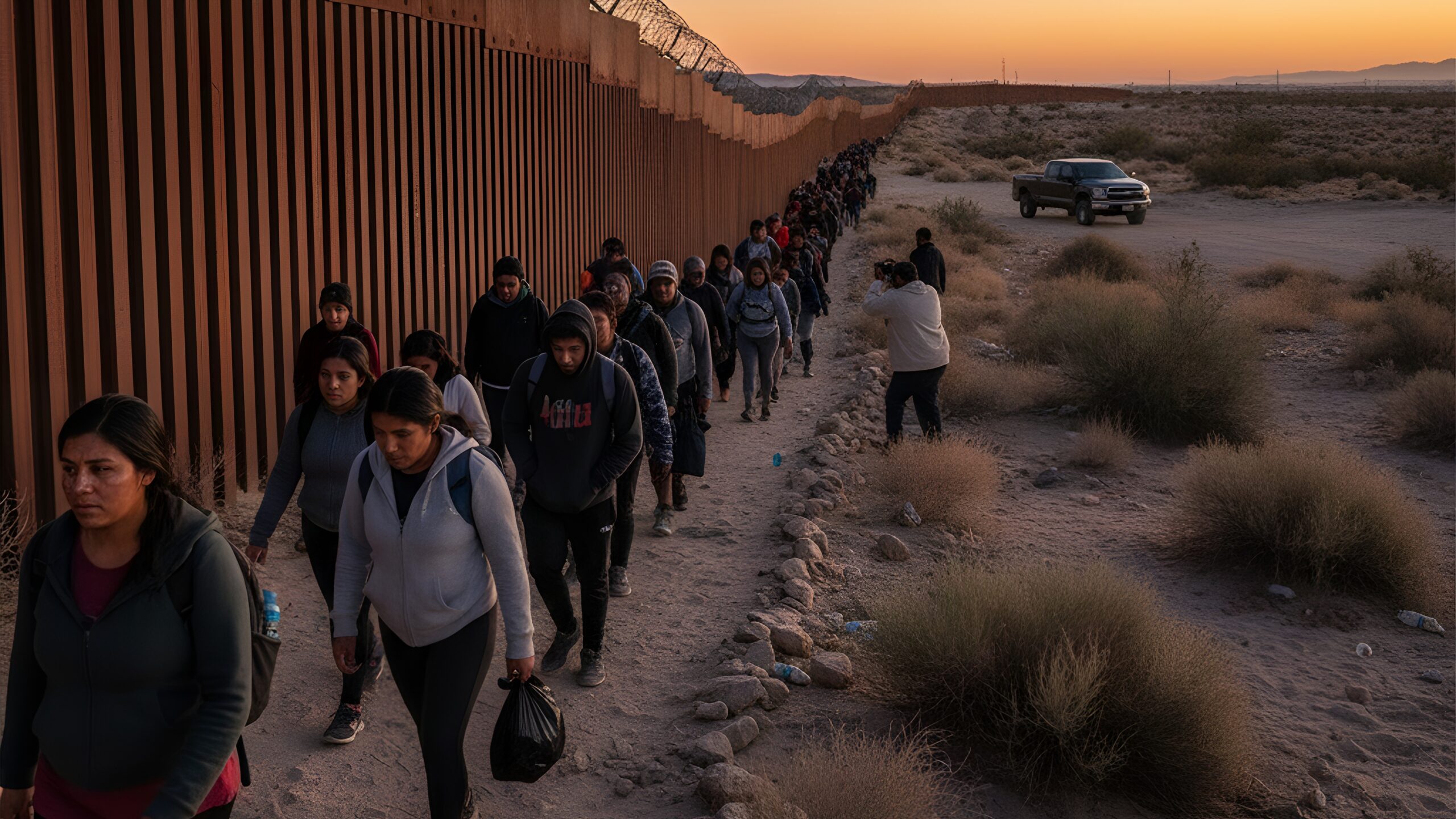
The latest demographic analysis revealing that the United States lost more immigrants than it gained in 2025 represents a moment that many experts have long predicted but few expected to arrive so suddenly.
For over 50 years, immigration had been the single most reliable engine of population growth in the U.S., sustaining the labor force, stabilizing communities, and replenishing the nation’s demographic vitality.
Yet in just six months, that narrative reversed. Between January and June 2025, the foreign-born population dropped from roughly 53.3 million to 51.9 million, marking the first net decline in half a century and signaling a profound shift in the country’s direction.
What makes the 2025 decline so striking is not just the size of the drop but the speed at which it occurred. The United States did not gradually ease into lower immigration levels; instead, it experienced a sharp downturn within a single reporting period.
Researchers attribute this swing to a combination of tightened border enforcement, rapid policy changes affecting asylum and visas, and an environment that has become increasingly difficult for both new arrivals and long-settled immigrants. At the same time, global migration pressures remain strong, making the U.S. reversal even more unusual in a world where many countries continue to see rising inflows.
One of the clearest indicators of this shift lies in the labor force. The immigrant share of American workers fell from about 20% early in the year to roughly 19% by summer.
While one percentage point may sound small, in a nation of over 330 million people it represents the disappearance of more than 750,000 immigrant workers. These workers were vital to industries already struggling with shortages—childcare, agriculture, food service, transportation, and construction among them. Their absence is likely to push employers to raise wages, reduce output, or rely more heavily on automation, each with its own economic consequences.
The factors driving immigrants out of the country appear to range from direct enforcement to indirect pressure. Stricter deportation policies have increased the number of removals, but a significant portion of the decline may be voluntary.
Many immigrants—particularly those without stable legal status—have found the new environment too uncertain or too hostile to remain. Some returned to their home countries after years or even decades in the U.S. Others sought opportunities in Canada, Europe, or parts of Asia where growing labor shortages have created more welcoming conditions.
At the same time, a slowdown in legal pathways such as work visas, family sponsorships, and humanitarian programs has reduced the number of new arrivals who might otherwise balance the losses.
Demographically, the implications are enormous. For decades, immigration has compensated for declining birth rates and an aging native-born population. Without steady inflows, the United States faces the very real possibility of slowing population growth—and even eventual decline.
Economists have long warned that such a scenario could strain social safety nets, reduce the ratio of workers to retirees, and undercut the country’s long-term economic expansion. The 2025 numbers suggest that this future may be closer than policymakers expected.
Communities across the country will feel the effects in different ways. Cities with large immigrant populations may see changes in school enrollment, housing markets, and small business activity.
Some neighborhoods built on decades of immigrant entrepreneurship could see storefronts close or change hands. Rural agricultural regions, which rely heavily on immigrant labor, may face difficult harvest seasons or rising production costs. In both urban and rural America, the absence of immigrants will leave visible and invisible gaps in daily life.
Politically, the decline is certain to intensify debates over immigration policy. Supporters of stricter enforcement may view the numbers as a sign that new measures are working.
Critics, however, will argue that the U.S. is forfeiting economic growth, damaging its workforce, and undermining its global reputation as a destination for opportunity. The divide between these perspectives may become even sharper as industries and communities begin to feel the effects of labor shortages, slower population growth, and reduced consumer spending.
One of the uncertainties shadowing the report is the question of data accuracy. Surveys, especially those involving immigrant participation, can face undercounting during periods of political tension. Some analysts suggest that a portion of the decline might be due to lower survey response rates among immigrant households. Yet even accounting for that possibility, the magnitude of the drop is too large to dismiss as a statistical artifact. The direction of the trend is clear, even if the precise numbers may shift with future revisions.
Globally, the shift in U.S. immigration patterns is likely to reverberate. For decades, the United States has absorbed more immigrants than any other country, shaping international migration flows across continents.
A decline in U.S. immigration could redirect movement toward emerging economic hubs or create new patterns of regional mobility. Countries that have long relied on remittances from immigrant workers in the U.S. may find their economies affected as families return home or income streams shrink.
As 2025 continues, the crucial question is whether this decline represents a temporary adjustment or the beginning of a long-term transformation. If current policies stay in place, analysts anticipate further drops in the immigrant population.
If conditions soften or legal pathways expand again, the country could regain some of the population it lost. For now, however, the data paints a picture of a nation moving into unfamiliar territory—one in which immigration, once a constant engine of growth, has shifted from expansion to contraction.
The United States has defined much of its modern identity through immigration, viewing it as both a source of strength and a symbol of openness. The 2025 decline challenges that identity in a profound way.
Whether this moment becomes a historical footnote or a lasting pivot point will depend on the decisions made in the months and years ahead. What is clear is that the demographic landscape of America is changing, and with it, the future shape of the country itself.

