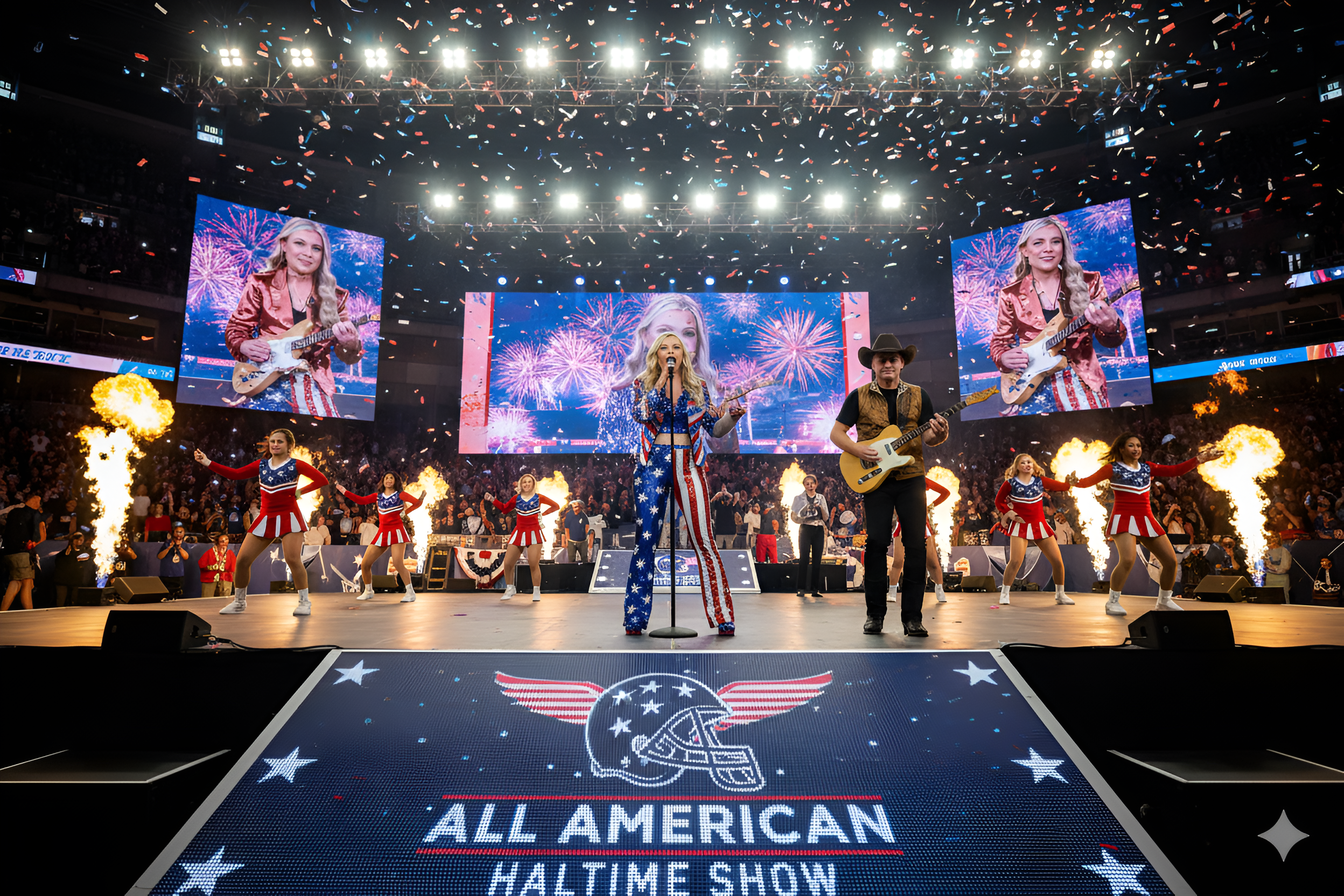
In an era where digital platforms often rival traditional broadcast giants, the 2026 Super Bowl halftime break witnessed a historic shift in how audiences consume live entertainment. As the official NFL stage prepared for a pop-heavy performance in Santa Clara, Turning Point USA (TPUSA) launched its inaugural All-American Halftime Show, a move that transformed the typical fifteen-minute break into a high-stakes cultural competition.
Led by Erika Kirk, who has taken the reins of the organization as CEO following the passing of her husband Charlie Kirk, the event was positioned not as a mere protest, but as a full-scale alternative for those seeking a different brand of entertainment. The bold strategy seems to have paid off in the digital realm; within just sixty minutes of going live, the broadcast reportedly cleared a staggering one billion views across a massive network of streaming partners and social media platforms.
The choice of Kid Rock as the headliner provided the necessary grit and star power to anchor the ambitious project. For Rock, the performance was a return to his “American Badass” roots, trading the polished, global-pop aesthetic of the main game for a raw, high-energy set that leaned heavily into Americana and rock-and-roll. Flanked by country mainstays like Brantley Gilbert and Lee Brice, the stage was set to appeal specifically to a demographic that felt the mainstream media had moved away from their values.
This “David vs. Goliath” approach was reflected in the distribution model. Unlike the NFL, which remains tethered to major network contracts, the All-American Halftime Show utilized a decentralized “digital blitz” strategy. By streaming simultaneously across X, Rumble, YouTube, and various independent news networks, the show met viewers where they were already spending their time. This accessibility, combined with the curiosity factor of a rival broadcast, fueled the viral velocity required to hit such astronomical viewership metrics so quickly.
Beyond the music, the event served as a significant milestone for Erika Kirk’s leadership. Stepping into the spotlight during one of the most-watched nights of the year, she framed the evening as a tribute to the legacy of the organization’s founder while signaling a new, media-centric direction for the future. By successfully siphoning a significant portion of the “halftime attention span,” the event has proven that counter-programming is no longer just a niche experiment—it is a viable competitor to the traditional media machine.
As the industry analyzes these numbers, the takeaway is clear: the monopoly on the “halftime moment” has been broken. Whether it was the allure of Kid Rock’s unfiltered performance or the pull of a patriotic alternative, the All-American Halftime Show has established a new precedent for how cultural events can be built from the ground up on the digital frontier.

