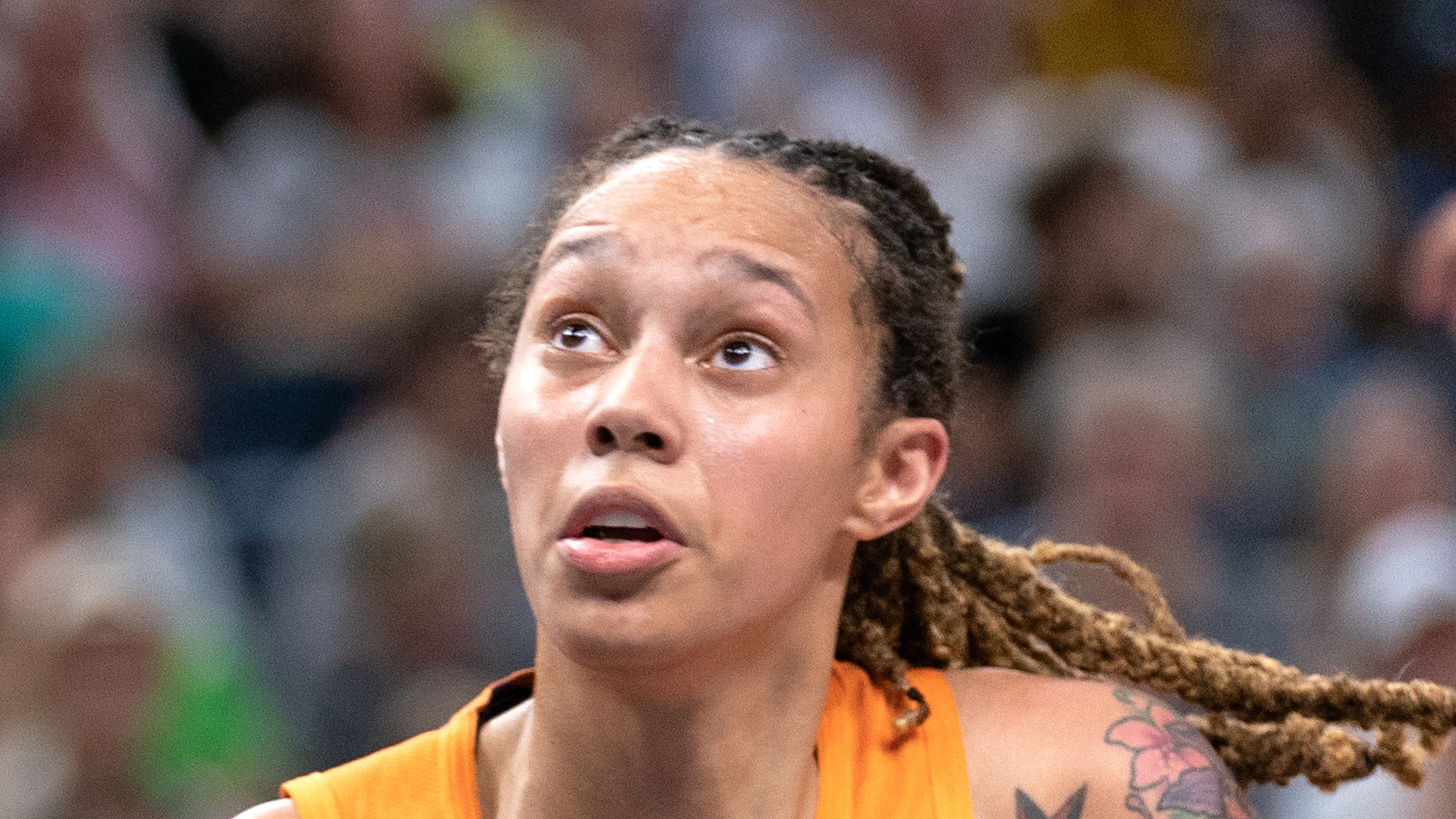
The WNBA has found itself at the center of another explosive controversy after claims began circulating online involving Brittney Griner and four other players.
The claim making the rounds is that the league is sitting on evidence concerning the players’ biological sex but has chosen not to release it. That has opened the door to a much bigger argument about transparency, eligibility and what the league is actually willing to tell the public.
The WNBA has not publicly confirmed the allegation. There has also been no independently verified evidence establishing the specific claim being circulated about the five players.
But that hasn’t stopped the story from spreading like wildfire. Within hours, social media was filled with arguments from both sides. Critics of the league demanded to know whether officials had conducted examinations or reviewed documentation that could affect eligibility.
Others pushed back, arguing that private medical information should never become public simply because a controversy starts trending online.
And that’s where the situation gets complicated. Professional sports leagues have always had rules governing eligibility. They also have procedures for handling sensitive information about their athletes.
Those two things don’t always fit neatly together when the internet demands immediate answers. The WNBA is now dealing with exactly that problem. If there is no evidence behind the claims, the league could simply say so and put the controversy to rest.
If officials have reviewed information relevant to their eligibility rules, however, critics want an explanation of how those rules were applied. They aren’t necessarily asking for private medical records. They want to know whether the same standards are being used for everyone.
That’s a question any professional sports league eventually has to answer. The controversy has also reopened the broader debate over fairness in women’s sports. For years, discussions about eligibility have produced some of the most heated arguments in athletics.
Supporters of stricter rules say competitive fairness has to come first. Others argue that athletes should not have their personal lives and medical histories turned into public spectacles.
Both sides have plenty to say, and neither appears interested in backing down. Meanwhile, the WNBA has found itself caught in the middle. The league can protect its players’ privacy while still explaining its policies.
What it cannot control is what millions of people decide to believe after reading an accusation online. That distinction has become especially important in the current controversy.
A social-media post is not an official league document. A viral photograph isn’t proof of someone’s biological sex. And a claim repeated thousands of times doesn’t become a verified fact simply because it has generated millions of views.
Still, there is a reason controversies like this continue to grow. People don’t like unanswered questions. When an organization says little, people often fill the silence themselves. That is exactly what appears to be happening here.
Every attempt to shut down the discussion produces another round of speculation. Every demand for evidence produces another argument over whether that evidence should even be made public.
And every new post sends the debate to another audience. The names involved have only made the situation bigger. Griner is one of the most recognizable players in women’s basketball, and any controversy involving her is almost guaranteed to attract enormous attention.
Adding four other players to the story has turned what might otherwise have been a niche argument into a national conversation. The WNBA now has an opportunity to handle the situation differently.
Rather than getting dragged into every rumor circulating online, the league could clearly explain its eligibility standards, how those standards are enforced and what information it is legally and ethically able to disclose.
That would not satisfy everyone. Nothing probably will. But it would at least give fans something more reliable than screenshots, anonymous posts and competing theories.
The larger issue isn’t whether social media can produce a louder argument. It obviously can. The question is whether the WNBA can provide enough transparency to separate legitimate questions from internet speculation.
For the players involved, that’s important too. Nobody should have their identity or private medical information decided by a viral post. At the same time, fans are entitled to understand the rules governing the competition they watch.
Those two principles don’t have to contradict each other. For now, the controversy remains exactly that—a controversy built around claims that have not been independently established.
But the conversation isn’t going away. And if the WNBA wants to stop the speculation from becoming even bigger, it may need to start answering the questions that are driving it.

